‘Dirty Dozen’ lists and ingredient-scanning apps – red flags or red herrings?
What's the myth?
Ever avoided a product because of a ‘red flag’ ingredient?
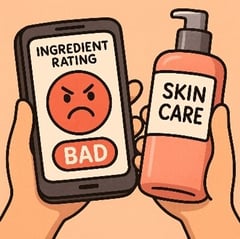
Maybe you’ve seen a ‘dirty dozen’ list or used an app that gives ingredients a rating or a red/amber/green light. These tools claim to help you spot harmful chemicals. But do they help you make informed decisions?
Apps that rate ingredients in everyday products, for everyday users—excluding some with specific health issues—usually provide oversimplified information. This can leave you thinking a product is dangerous when it’s actually safe to use, and can spread confusion about how chemical safety really works.
So why do blacklists and ingredient-scanning apps provide more ‘red herrings’ than legitimate red flags?
What are the facts?
-
Blacklists and ingredient apps confuse hazard and risk
One of the major problems with blacklists and ingredient-scanning apps is that they confuse hazard with risk.
That means they ignore the fact that any ingredient can be hazardous in large doses or under specific conditions. That doesn’t mean it’s harmful at the levels found in cosmetics, personal care and household products. And these tools rarely account for factors like exposure level or how the product is used—all of which are crucial in determining real-world risk.
For example, a so-called ‘red flag’ ingredient might be entirely safe when mixed with other ingredients, or used at very low levels, or used in a rinse-off product.
For more on this, see Extra extra…Toxic chemicals found in!
Regulators are the experts in chemical assessment and risk evaluation—so if an ingredient is allowed in a product, it is there at levels that they consider safe for product users. Assuming of course that people use products as they are intended to be used and follow any applicable safety precautions.
-
‘Do-it-yourself’ chemical safety isn’t empowering, its misleading
Ingredient apps and ‘dirty dozen’ lists promote a DIY approach to chemical safety. They oversimplify complex science into traffic-light systems or scores, giving consumers a false sense of fear (or security), without the scientific context or expertise needed to interpret the ratings correctly.
That isn’t empowerment, it’s confusion dressed up as clarity.
People can end up avoiding ingredients that are safe and important—like preservatives that stop bacteria from growing in products, or sunscreens that help prevent skin cancer.
-
Australia’s science-based safety system is working for you
When we rely on red-flag apps or simplified ingredient blacklists, we risk ignoring something far more reliable: the expert-run safety systems that already exist here in Australia—and globally.
These systems use science to evaluate ingredients by assessing hazard, dose, exposure and long-term effects, in the context of how products are actually used.
So, true empowerment isn’t about scanning a barcode to ‘uncover hidden dangers’. It comes from knowing there’s a system in place—led by experts—to keep you safe. Trust in that system is the best way to help you make confident, informed choices.
For more detail on how Australia’s regulatory system keeps you safe, see Product safety – a common priority?