Ingredients

Quats – better not?

icon-about@2000x

What are they?

Quats, also known as quaternary ammonium compounds (or QACs), are a large class of chemical compounds with similar chemical structures.
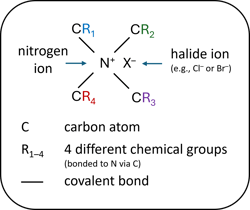
Quat structure_1They share one key feature: a positively charged nitrogen atom connected to four carbon atoms. However, the chemical groups attached to the four carbon atoms differ depending on the specific quat. It is the combination of these attachments that give a specific quat its specific properties.

Quats kill microorganisms, including bacteria, viruses and fungi. They are used for a range of purposes—including as antimicrobials, surfactants, preservatives and anti-static agents—in a wide range of products—such as cleaners, disinfectants, sanitisers, laundry products, body wash, shampoo, hand lotions, toothpaste, topical medicines and nasal sprays.

You might remember that disinfectants containing quats were recommended during the COVID-19 pandemic because they were effective in killing the virus.1

Quats are common ingredients that have been in safe use for more than 60 years. The specific quat and the amount present in a product depend on the product category and its use.

Myth icon

What's the myth?

‘Myth’ may not be quite the right word in this case.

Rather, some preliminary research results suggested that some specific quats may be linked to potential health issues.

For example, an in vitro study2 reported that six quats—not all those tested—inhibited mitochondria in human and rat cells. Two of these quats, cetylpyridinium chloride (CPC) and benzalkonium chloride (BAC), also inhibited oestrogen activity. In another study, BAC and dodecyl dimethyl ammonium chloride (DDAC) were linked to reduced fertility in rodents3 and neural tube defects in their offspring4. Another very preliminary study5 found that some quats impaired the development of mouse oligodendrocytes.

Some media chose to take these preliminary results and run with alarming and overblown human health angles. For example, ‘Chemicals in common household products could be making us infertile, scientists say’.6 ‘Your disinfectant wipes could be making you fat, foggy and tired’.7 Or ‘Common household chemicals pose new threat to brain health8 (the latter was from the media publication of the university that conducted the study).

So, what are some facts about quats, metabolism, fertility and brains? Do you need to worry about quats in your products? Nope – the regulatory system is well on top of these chemicals. 

Some scientific terms from these studies…

In vitro – literally ‘in glass’ – means experiments were performed on isolated cells, not in living organisms.

Neural tube defects occur when the neural tube, which forms the brain and spinal cord, doesn't close properly during the first few weeks of gestation. This can lead to severe health problems.

Mitochondria are cell organelles responsible for cellular energy production. Very. Important.

Oestrogen is the female sex hormone, so changes in its activity can affect various aspects of women’s and men’s health.

Oligodendrocytes are cells belonging to the central nervous system that produce myelin, which insulates nerve cells.

Facts icon

What are the facts?

Furphies icon

The bottom line?

Quats are well studied and continue to be monitored and regulated, globally. There is no new scientific evidence linking BAC, DDAC or CPC to new adverse health effects. 
No need to…

avoid products containing quats, or any specific quats. 

But please do...

follow the manufacturer’s instructions with all products you use.

Sources
  1. TGA 2020, Appropriate use of disinfectants: Information for consumers, health professionals and healthcare facilities
  2. Datta, S et al., 2017. 'In Vitro Evaluation of Mitochondrial Function and Estrogen Signaling in Cell Lines Exposed to the Antiseptic Cetylpyridinium Chloride', Environmental Health Perspectives, Vol 125(8). 
  3. Melin, VE et al., 2014. ‘Exposure to common quaternary ammonium disinfectants decreases fertility in mice’, Reproductive Toxicology, Vol 50, pages 163-70; Melin, V.E., 2016. ‘Quaternary ammonium disinfectants cause subfertility in mice by targeting both male and female reproductive processes’, Reproductive Toxicology, Vol 59, pages 159-166
  4. Hrubec, TC et al., 2017. ‘Ambient and Dosed Exposure to Quaternary Ammonium Disinfectants Causes Neural Tube Defects in Rodents’, Birth Defects Research, Vol 109 (14), pages 1166-1178.
  5. Cohn, EF et al., 2024, ‘Pervasive environmental chemicals impair oligodendrocyte development’, Nature Neuroscience vol. 27, pages 836–845
  6. Victoria Allen, Daily Mail, 22 August 2017, ‘Fertility warning over antiseptic chemicals in cleaning fluid, wipes and mouthwash: Exposure to common household products damages human cells
  7.  Kate Arcell, 4 September 2023, ‘Your Disinfectant Wipes Could Be Making You Fat, Foggy and Tired — MDs Weigh In on The Health Dangers of “Quats”
  8. Case Western University Reserve Newsroom, 26 March 2024, ‘Common household chemicals pose new threat to brain health
  9. AICIS, 30 June 2022, Benzalkonium halides Evaluation statement
  10. Therapeutic Goods Administration, The Poisons Standard
  11. US Environmental Protection Agency, Office of Pesticide Programs, Antimicrobials Division, 2006, ‘DRAFT Didecyl Dimethyl Ammonium Chloride (DDAC) Risk Assessment
  12. US Food & Drug Administration, July 2017, Consumer Antiseptic Wash Final Rule Questions and Answers: Guidance for Industry 
  13. US FDA, Skip the Antibacterial Soap; Use Plain Soap and Water 
  14. SCCS, 25 March 2015, Opinion on Cetylpyridinium chloride - submission II (P97), SCCS/1548/15
  15. EU Cosmetics Regulation 1223/2009