Household cleaning – natural and chemical free?
What is it?
When people talk about ‘natural’ cleaning, they might mean using homemade cleaners based on common household substances. Like lemon juice, bicarbonate of soda, vinegar and borax. (Even though these are chemicals and are usually store-bought.)
Sometimes, ‘natural’ cleaning can be taken to an (impossible) extreme – ‘chemical free’ cleaning!
What's the myth?
Some people believe that specially formulated products,1 (aka ‘products from the supermarket cleaning aisle’), expose you and your household to unsafe, toxic chemicals. And that ‘natural cleaning’ using home recipes is both healthier and effective.
So, is cleaning your house with ‘natural’ chemicals (aka common household substances) safer as well as effective?
What are the facts?
-
Natural does not necessarily equal safe!
There is no such rule as natural is good, man-made is bad. What is safe and not safe depends not only on what the substance is, but how much is used and how it is used. Its origin is irrelevant.
I’m sure you can think of some examples of natural equals very very dangerous.
Plants are notorious for producing toxic substances. Why might this be? Because plants can’t defend themselves by running away from predators, they have developed various defences. Some are like a suit of armour—think thick bark or waxy leaf surfaces. Others are like weaponry—thorns, spines and chemicals, including poisons. Plant poisons are also called phytotoxins (sounds like ‘fight-o-toxin’—seems appropriate!).
There are toxic minerals and elements. Entirely natural too.
And many traditionally formulated products do use ‘natural’ ingredients.
See Is natural…is good? for more on this.
Just a few plant poisons
• Alkaloids (e.g., atropine, hyocyamine and scopolamine in deadly nightshade)
• Ricin (from the caster oil plant)• Solanine (e.g., in potatoes, tomatoes, eggplant and tobacco)
• Amygdalin (in some seeds, like apple, pear and cherry), which is metabolised into cyanide
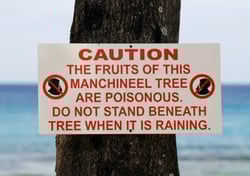
• Manchineel, or ‘little apple of death’. Many natural chemicals, many effects. Look it up, so fascinating!
Just a few mineral/elemental poisons
Asbestos, arsenic, mercury, chromium -
Effective cleaning products reduce health risks and improve quality of life
Not much was known about the transmission of disease before the 1800s when scientists began to prove that microorganisms caused things like food spoilage.
Since then, the enormous benefit of hygiene in preventing the spread of disease-causing organisms (‘pathogens’) has come to be understood. Improved hygiene has helped contribute to a reduction in infectious diseases and increased life expectancy.
Good hygiene in the home helps to prevent the spread of organisms that can cause disease, and was a strong focus of controlling the COVID 19 pandemic. Living in clean surroundings can also help you feel good about yourself and about life in general.
Cleaning products that are designed specifically for the home achieve two important goals.
First, they help keep your living areas, food preparation areas, bathrooms, bedrooms and clothing clean, hygienic and comfortable. A clean home can be a more relaxing place to unwind, or to welcome and entertain guests.
Second, they give time back to you.
Some people enjoy cleaning, it’s true. But probably most would prefer to be doing something else.
Cleaning products are designed for specific jobs. Like bathroom cleaners that remove soap scum. Stainless steel cleaners that clean sinks and stovetops without damaging the surface. Kitchen ‘spray-and-wipes’ that cut through grease. Products like these are designed to be fast and effective, so you can get the cleaning done efficiently and get back to [insert favourite pastime]. (Or, let’s face it, more likely other household chores, work or parenting.)
-
Cleaning products are designed to be effective and should not be mixed
It’s important that cleaning products are not mixed together. Whilst each product is carefully formulated and safe to use according to the manufacturer’s directions, combining cleaners can be unsafe. For example, mixing an acidic cleaner with a chlorine bleach cleaner produces toxic chlorine gas.
Also, please be careful if you are planning to mix household chemicals for cleaning—some should not be mixed together (such as bleach and vinegar, or bleach and rubbing alcohol).
-
Natural/homemade cleaning agents may not do the job properly
If you are cleaning dirty surfaces, you want products that are safe AND effective.
Generally, homemade recipes are not as effective as specifically formulated products. That means you may need to spend more time and mechanical effort, or ‘elbow grease’, to get things clean. Please be really careful if you are planning to use homemade chemical products for disinfecting.
Store-bought cleaning products are designed to help make household chores as quick and painless as possible, giving you more time to spend doing other activities.
-
A lot of design goes into a household cleaning product
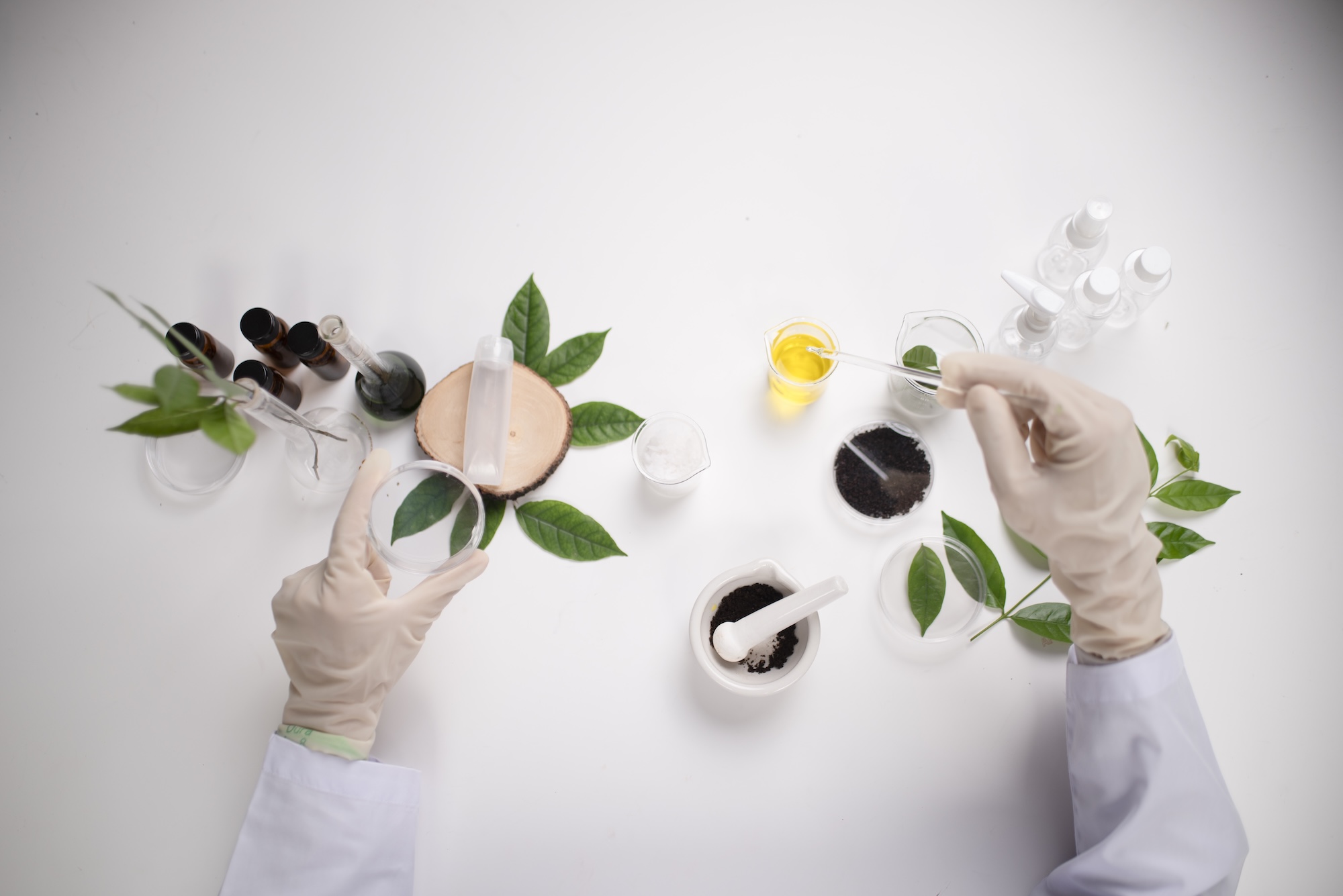
Cleaning products on the supermarket shelf are not simply a collection of various chemical ingredients. A lot of design, experimentation and testing go into every product.
Here are just some of the things that product manufacturers cover when making a cleaning product:
-
That the ingredients are compatible with each other and result in an effective and safe product
-
That the product is not harmful to your household surfaces or items
-
That the product remains stable, well mixed and free from bacteria - both on the supermarket shelf and for its shelf-life
-
That the product has a suitable consistency for application, e.g. a paste, liquid, spray or gel, throughout its shelf-life
-
That suitable protective packaging allows safe and effective delivery of the product, throughout its shelf-life
-
That complete labelling is provided, including instructions for use, emergency and first aid information, and manufacturer contact information
-
That effective quality control procedures are in place for safety during production
- That all aspects of the product’s lifecycle comply with the relevant regulations
For more information on formulation chemistry, see What STEM is involved in our industry? -
-
A product may contain a hazardous ingredient, but that doesn’t mean the product is hazardous
Cleaning products are carefully formulated and are safe to use according to the manufacturer’s directions. The Australian industry is tightly regulated to ensure that unsafe products are not allowed in the marketplace.
Some cleaning products may contain an ingredient that requires a warning to be printed on the product label. ‘Caution’ indicates that the product contains a substance with a low potential for causing harm; appropriate packaging, simple warnings and safety directions reduce the risk. ‘Poison’ indicates that the product contains a substance with a moderate potential for causing harm; distinctive packaging, strong warnings and safety directions reduce the risk. Child-resistant closures are examples of one safety measure that may be required, like on a bleach bottle.
However, if an ingredient is deemed to pose too great a risk of harm to human health or the environment, use of that ingredient will be limited or prohibited in household products.
The bottom line?
Formulated cleaning products have been carefully designed to help you save time and effort, maximising efficiency and results when you clean your home.
No need to…
worry ‘is it safe’ or waste time cleaning with less effective chemicals.
But please do...
use household cleaning products according to the manufacturer’s instructions.