IUPAC is the universally recognised authority on chemical nomenclature and terminology. One of IUPAC’s goals is to establish unambiguous, uniform and consistent nomenclature and terminology for specific scientific fields. IUPAC has a systematic way of naming chemicals that makes many substances sound very complicated.
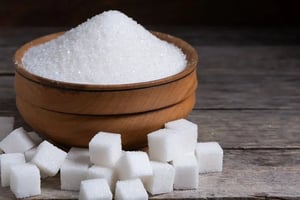 For example, sucrose (table sugar) has the IUPAC name β-D-fructofuranosyl α-D-glucopyranoside. Scary? It’s still just sugar.
But wait…it gets worse…the full systematic IUPAC name for sucrose is (2R,3R,4S,5S,6R)-2-{[(2S,3S,4S,5R)-3,4-dihydroxy-2,5-bis(hydroxymethyl)oxolan-2-yl]oxy}-6-(hydroxymethyl)oxane-3,4,5-triol. Aaaaagggghhhhh!!!! Oh wait…it’s still just sweet sweet sugar.
Every chemical substance—yes, including naturally occurring chemicals and natural extracts—can also be identified by their CAS number. A CAS number is a unique identifier assigned to a chemical substance. It's a way to unambiguously identify a specific chemical, regardless of its name or where it’s being used.
In Australia, cosmetic ingredients are listed by their INCI names. These are official ingredient names that are standardised across most countries around the world. This information helps you make informed choices about the cosmetics you buy.
IUPAC: International Union of Pure and Applied Chemistry
CAS: Chemical Abstract Service
INCI: International Nomenclature Cosmetic Ingredient