Product safety – a common priority
What protects you?
It can be easy (and even fun) to mouth off at 'corporations'. But what’s the benefit to a company of making an unsafe product? Think about the consequences: loss of reputation, loss of customers, legal consequences, fines... Much better to make a product that is safe, effective and that customers will want to use again and again. This is the goal of reputable companies.
In Australia, products need to comply with rigorous regulatory requirements. This system is designed to deliver safety for people and the environment.
Learn more about the system that protects you, below.
What are the facts?
-
Australia’s regulatory system delivers safety
Australia, like other advanced nations, has a robust regulatory system.
Australia’s system includes regulation of ingredients, products, labelling and advertising claims. It spans federal, state & territory and local governments.
Several agencies within the federal Department of Health are responsible for human health protection.
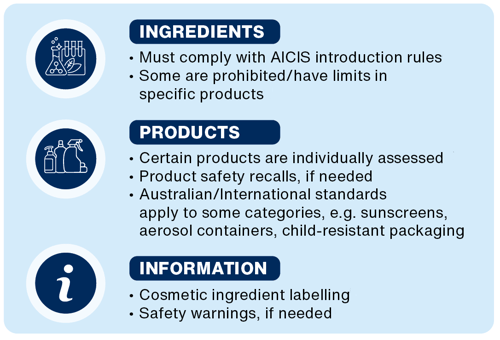
The main ingredient regulator for cosmetic, personal care and household products is the Australian Industrial Chemicals Introduction Scheme (AICIS). AICIS assesses the risks of importing or manufacturing the ingredients used in these products. AICIS also continues to assess chemicals already in use in Australia on a priority basis. For example, if there are potential health or environmental concerns. Both AICIS and the Federal Health Department monitor and assess new scientific information and reports regarding chemical ingredients.
All ingredients in cosmetic, personal care, cleaning and other household products sold in Australia must meet AICIS introduction criteria.
All manufacturers and importers of products and ingredients used in these products must be registered with AICIS.Ingredients used in cosmetic, personal care and household products are also regulated by the Poisons Standard.1 This national classification system controls how chemicals are made available to the public and whether safety warnings need to be provided on labels.
Products that make a therapeutic or health benefit claim are regulated by the Therapeutic Goods Administration (TGA). Therapeutic products are designed to prevent, diagnose, cure or alleviate a disease, ailment, defect or injury. For example, some mouthwashes, toothpastes, sunscreens, medicated soaps and anti-dandruff shampoos are regulated as therapeutic goods in Australia. The TGA’s activities include assessing therapeutic products for performance and risks, authorising their supply and monitoring their performance in the market.
The Australian Competition & Consumer Commission (ACCC) is responsible for regulating product claims, and cosmetic product labelling. Cosmetics must be labelled in accordance with the Consumer Goods (Cosmetics) Information Standard 2020. The ACCC can immediately remove unsafe products from sale.
How are personal care, cosmetic and household products regulated in Australia?

-
Risk assessment underpins regulation in Australia
‘Risk’ means how likely it is for something bad to happen.
Almost any action you take carries some risk. Like driving or being a passenger in a car. But the level of risk varies greatly depending on the action. Some actions are inherently higher risk than others, like smoking and base jumping.
In Australia, whether an ingredient or product should be available to the public, and any limits to its availability, is based on risk assessment. For there to be a risk of harm, it must be determined that the ingredient or product is likely to contact the body in such a way that it could cause harm.
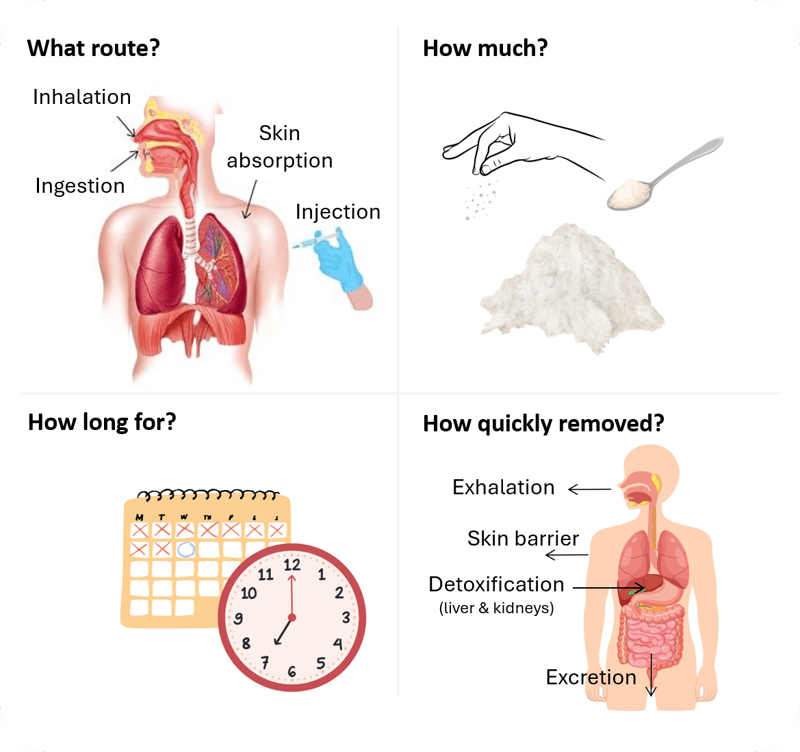
The risk is based on:
• The hazard, which is determined by the inherent properties of the ingredient or product.
• The dose, which is the amount of substance that could reach a particular biological system. This is determined by the concentration of the substance, duration of contact, route of exposure and the ability of the body’s defences to eliminate enough of the substance before it can have an impact.What determines risk?
Hazard – the inherent properties of a substance Dose – your contact with a substance 

-
Risk is different from hazard
The important difference between ‘hazard’ and ‘risk’ isn’t always realised.
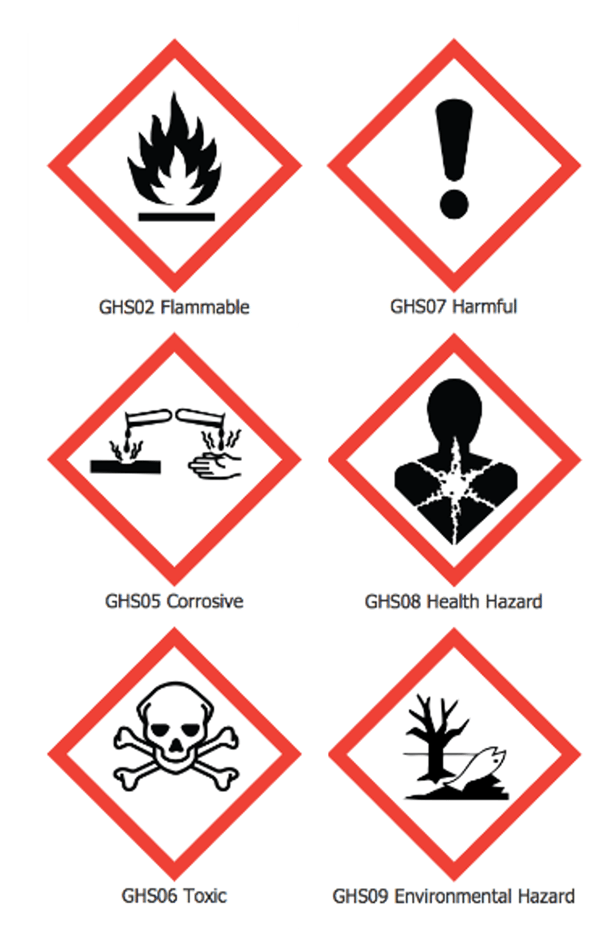
It’s not uncommon to see media, activist claims or social media comments about ‘toxic chemicals’ in everyday products. But the source of this information is often the safety data sheet (SDS), which provides hazard information.
The problem is, SDSs are relevant for people who work with industrial quantities of concentrated chemicals; this information has little relevance to consumers who use products containing very small or diluted quantities.
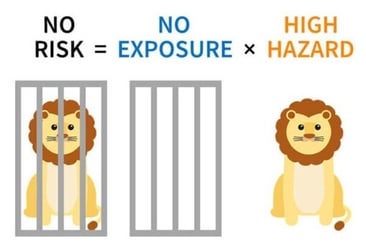
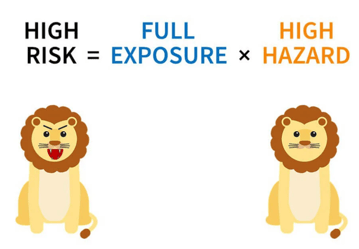
Let’s think about a different example. A lion. (A big thank you to Dr Michelle Wong, aka Lab Muffin, who allowed her graphics to be reproduced here.2)A lion represents high hazard. It can literally rip you apart. 
Now let’s consider the state of the lion. Caged at a zoo? (Maybe not Taronga Zoo! 😊) How would you rate this risk? No risk, right? You are not exposed to the lion. 
What about on the African savannah? You’re driving along, your open-top vehicle breaks down and there you are, stranded. And next to your car is a wild lion. High risk! 
So, even though an inherent hazard may be high, risk can be low. This applies to chemicals too. This is what manufacturers and regulators aim to ensure.
-
Risk assessment determines what control measures are needed
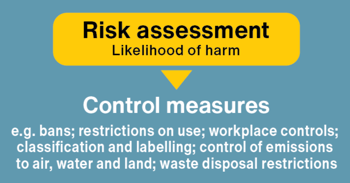
Once a risk assessment has been undertaken, how to control or minimise any risks is determined.
Control measures can range from bans, restrictions on use, workplace controls, classification and labelling measures, control of emissions to air, water and land, and waste disposal restrictions. Regulators are responsible for making sure the makers and suppliers of products comply with these controls.
Example control measure: Use restrictions
How do regulators work out safe limits for ingredients in cosmetic, personal care and household products? Let’s work through a hypothetical, simplified example for ‘Ingredient X’.
Step no.
Procedure
Example result for Ingredient X
1
Determine what dose of the substance has no effect on a test animal population (or for cosmetics, via an approved safety test that does not use animals)
0.5 mg per kg bodyweight
2
Apply a 10-fold safety factor for humans
0.05 mg per kg bodyweight
3
Apply a further 10-fold safety factor to account for variability within the human population
0.005 mg per kg bodyweight
4
Apply further factors depending on data limitations
< 0.005 mg per kg bodyweight
Therefore, the final limit for Ingredient X will be considerably below 0.005 mg per kg bodyweight.The regulator will restrict the use of Ingredient X in products to levels that ensure exposure via these products are below the safe limit.
Example control measure: Safety recall
What happens if a product is deemed to pose a safety risk, after it is on the market?
In Australia, a product can be recalled if it may be unsafe. Voluntary safety-related recalls are the responsibility of the supplier. Under Australian Consumer Law, suppliers are required to notify the federal minister within two days of commencing recall action. The minister also has the power to order a compulsory recall of a product if it will or may cause injury to a person.
The ACCC is responsible for protecting the rights of consumers and businesses. The ACCC enforces product recalls for consumer goods and monitors their effectiveness. Information about product recalls is published on the Product Safety Recalls website www.recalls.gov.au. The TGA can also recall therapeutic goods that are unsafe.
-
Trusting our regulatory system is much more logical than trusting online ‘experts’ (spoiler – not always experts) and other non-expert sources
People have different amounts of scientific knowledge and training. And no one has the time and means to conduct their own informed risk assessment on every ingredient in every product that they buy.
That’s why entrusting regulatory scientists and expert scientific bodies with evaluating risk and ensuring safety is a logical choice. As well as, of course, safety experts involved in the design and making of products. It is in no one’s interest to have unsafe products on the market, least of all product manufacturers. Why would a company want to cause harm? Think of the reputational damage. The lost revenue. What’s in it for them? The vast majority of product manufacturers are responsible and want your repeat custom!
Modern regulatory systems, especially in countries like Australia, are designed to protect consumer safety. In today’s global marketplace, where products are traded across borders, these systems are more robust than ever. There’s greater international scrutiny and stronger collaboration between safety regulators, which means less chance of an unsafe product being placed on the market and a higher likelihood that any unsafe products will be identified and swiftly removed.
-
Well-placed trust is essential for focusing on real risks
In an age of constant information—where everyone has a platform—the challenge isn’t accessing knowledge, it’s sorting the sound science from the noise.
When perceptions are driven by fear, misinformation or exaggeration, often amplified by media scares or activism rather than solid evidence, there can be negative consequences.
For example, if you are focused on a theoretical, unproven risk relating to a sunscreen ingredient, while downplaying or ignoring the well-documented and serious consequences of unprotected sun exposure, there is a very real risk of harm from sunscreen avoidance.
Australia’s life expectancy is in the top 10 in the world.3 And we have an unprecedented level of product choice. So it seems reasonable to trust that our regulatory systems are working—to protect consumers, to keep unsafe products off the market, and to support public health for generations to come.
The bottom line?
It is in no one’s interest to have unsafe products on the market.
Let's trust the experts to do their jobs, which includes product makers as well as regulators. Rather than being swayed by any online gut-feel non-science.
Sources
- Therapeutic Goods Administration, The Poisons Standard (the SUSMP)
- Michelle Wong, 14 December 2020, 'Clean Beauty Is Wrong and Won’t Give Us Safer Products'
- www.worldometers.info/demographics/life-expectancy/