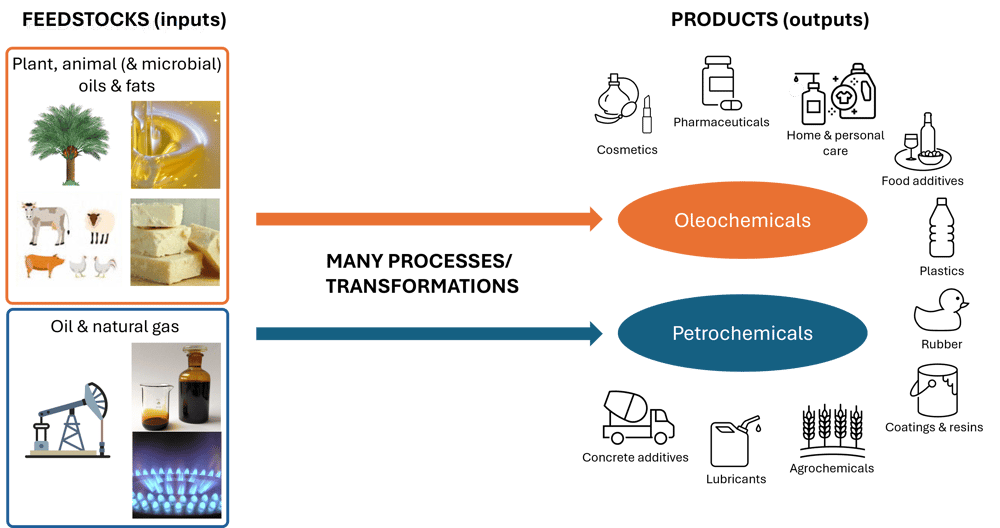
This issue is not as simple as renewable being better non-renewable sources. Without a life cycle analysis, it is not possible to categorically say that oleochemical ingredients are environmentally ‘better’ than petrochemical ingredients.
Palm oil is a good example. It is a plant-based ingredient, but the environmental (and social) impacts of growing oil palm crops have led to widespread and very public concerns. Considerable efforts are being made to improve the sustainability of palm oil supply chains.
Some studies have compared the environmental impacts of oleochemical- and petrochemical-based surfactants.
For example, one study compared 18 life cycle impacts for petrochemical- and palm kernel oil–based surfactants. (Surfactants are the main active ingredient in cleaning products.)
You may have already guessed where this is going. That’s right, the petrochemical-derived surfactant had lower overall environmental impact than the palm kernel oil–derived surfactant. Better average life cycle environmental performance. Less impact in 12 out of 18 environmental categories, including lower greenhouse gas emissions.1
The same study noted similar findings in previous studies, which ‘did not find any scientific basis for any single feedstock source to be environmentally superior’. They concluded that environmental trade-offs were associated with both sources and impacts depended on specific practices.
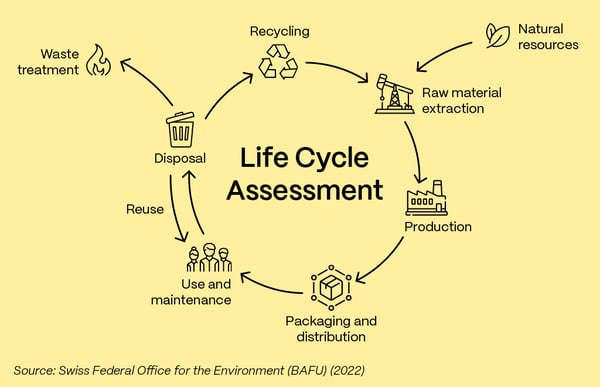
Life cycle assessment?
A life cycle analysis determines the environmental impacts over all relevant stages of a product’s life.