Household Cleaning

Can you be too clean?

icon-about@2000x

Too clean?

The ‘hygiene hypothesis’, first proposed in 1989, suggested that excessive cleanliness could be responsible for the observed increase in allergies and autoimmune disorders in developed countries over the last century. These disorders are rare in developing nations, but life-threatening infectious diseases remain common. And life expectancies remain much lower than in the developed world.

According to the hygiene hypothesis, when you are exposed to a variety of microorganisms early in life, your immune system learns how to react to foreign substances. So, growing up in ‘sterile’ environments means less exposure to microorganisms. Which might mean that your immune system doesn’t learn how to respond appropriately to allergens and other potential triggers.

Science spot icon
Science spot

Allergies are where your immune system overreacts to allergens in the environment, or in certain foods (e.g. peanuts) and toxins (e.g. bee stings). Drugs can also trigger allergic reactions. Symptoms range from mild swelling, watery eyes and sneezing to life-threatening anaphylaxis.

Autoimmune disorders are when your immune system mistakenly attacks your own body. Although the exact causes of autoimmune disorders are still unclear, it is thought that environmental risk factors may play a role. And, interestingly, some disorders also seem to be triggered or worsened by particular infections.

Myth icon

What's the myth?

The hygiene hypothesis is more over-simplification than myth.

The idea is that being 'too clean' or keeping your home hygienic causes allergies and autoimmune diseases — or that modern cleaning habits, antibacterial products or disinfecting weaken children’s immune systems.

So, should we ditch the household cleaning routine and let filth reign?

Facts icon

What are the facts?

  • The hygiene hypothesis has been refined and renamed – emphasising the importance of ‘targeted hygiene’

    The ‘hygiene hypothesis’ may continue to stick in the mind for some, but it is outdated.

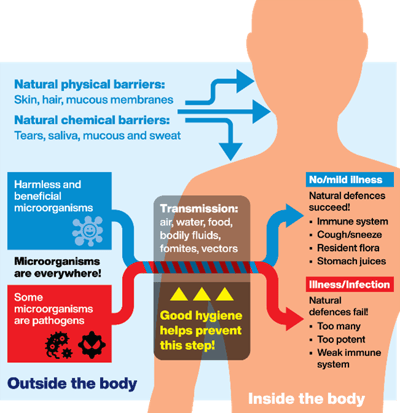
    In its place is the ‘old friends’ hypothesis, proposed in 2003. The ‘old friends’ hypothesis focuses on the importance of exposure to non-pathogenic commensal microorganisms to good immune function, especially in early life. And removes the focus on hygiene, which is as important as ever in preventing the spread of infectious disease.

    icon-science-spot@2000x
    Non-pathogenic commensal microorganisms…what?

    Pathogenic microorganisms: disease-causing microorganisms. BAD.

    Commensal microorganisms: microorganisms that live on the body and help maintain human health (also known as normal microflora). GOOD.

    Fun fact: the human body contains 10x more microorganisms than human cells!

    A 2016 paper1 emphasised the need to ditch the term ‘hygiene hypothesis’. This paper called for ‘targeted hygiene’, amongst other strategies,2 to maximise ‘protection against pathogen exposure while allowing spread of essential microbes between family members’.

    ‘Targeted hygiene’? In other words, cleaning and disinfecting at specific times and places to reduce the risk of exposure to harmful microorganisms. As opposed to fanatically removing every speck of dirt or using antibacterials indiscriminately all over your house.

Furphies icon

The bottom line?

Good personal and home hygiene is an essential part of preventing the spread of infectious disease.
No need to…

go to extremes, like indiscriminately using antibacterial products OR cultivating a germ-breeding ‘home pigsty’.

But please do...

consider targeted hygiene, focusing on areas and situations where pathogens are most likely to spread.

Sources
  1. Bloomfield SF et al., ‘Time to abandon the hygiene hypothesis: new perspectives on allergic disease, the human microbiome, infectious disease prevention and the role of targeted hygiene.’ Perspect Public Health. 2016 Jul;136(4):213-24
  2. ‘natural childbirth, breastfeeding, increased social exposure through sport, other outdoor activities, less time spent indoors, diet and appropriate antibiotic use’ – see above reference
  3. AIHW 2022 ‘Changing patterns of mortality in Australia since 1900’, Australia’s health 2022: data insights